Back to projectsDesktop Software
Tune Matrix
A Python and PySide6 desktop app that helps musicians, DJs, and audio creators import songs, detect BPM and key, apply tempo/key adjustments, separate stems, and manage processed exports without modifying original audio files.
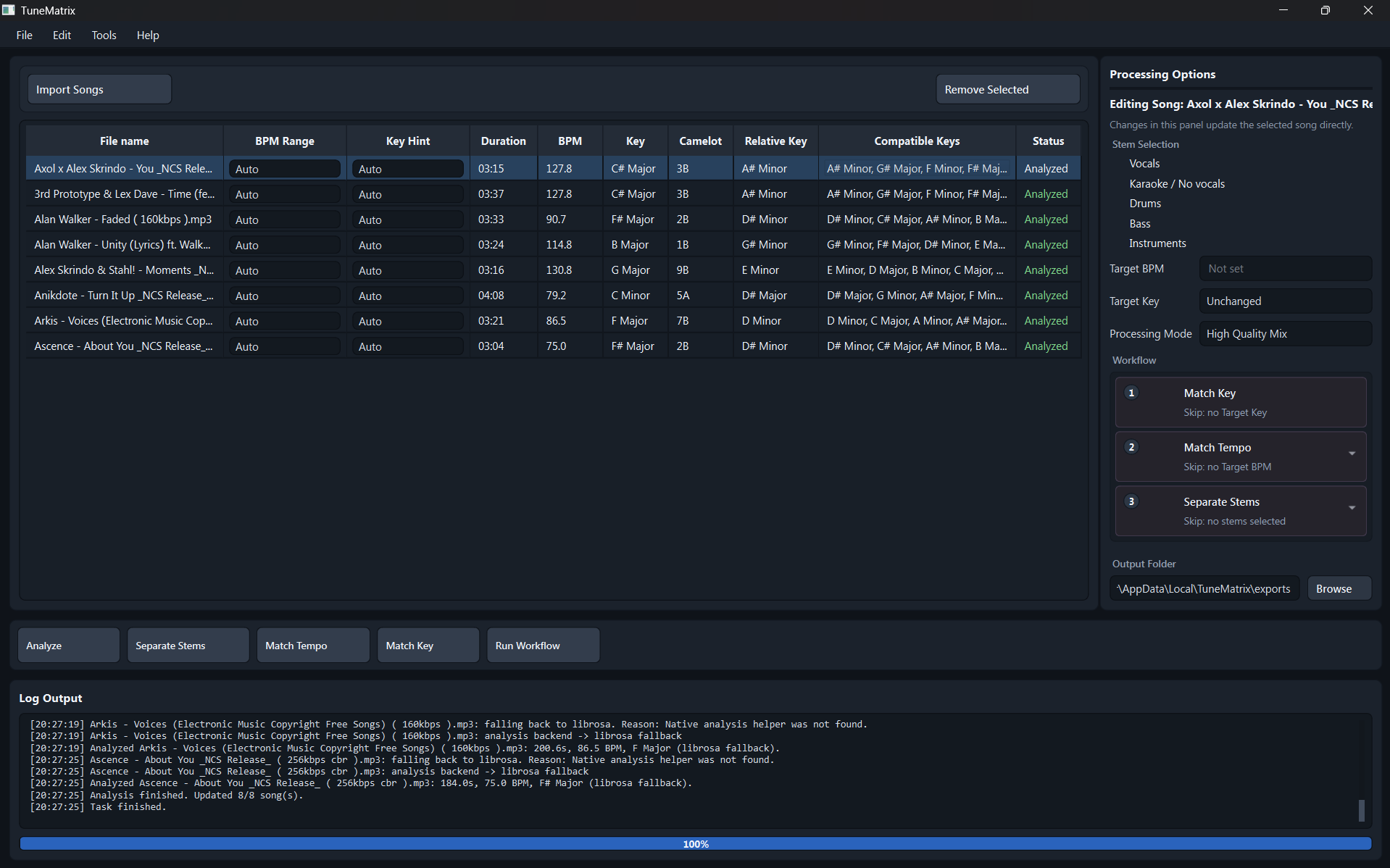
Open-source music processing app
Year
2026
Role
Open-source creator and maintainer, desktop application architecture, PySide6 UI development, audio-processing workflow design, worker-thread orchestration, native analysis helper integration, testing, documentation, packaging, and release automation
Problem
Music creators often need to prepare tracks by analyzing BPM and key, matching tempo, shifting key, separating stems, and exporting processed versions. These tasks are commonly spread across multiple tools, command-line workflows, or heavy DAW setups, making the process slow, fragmented, and difficult to repeat safely across multiple songs.
Solution
TuneMatrix provides a dedicated desktop workflow for importing multiple songs, automatically analyzing duration, BPM, key, relative key, and compatible keys, then running a structured processing pipeline for key matching, tempo matching, stem separation, and export. The app uses background Qt worker threads to keep the UI responsive, prefers a native Essentia-based analysis helper when available, falls back to librosa when needed, integrates external audio tools such as FFmpeg, Rubber Band, and Demucs, and stores project sessions in JSON for repeatable workflows.
Outcome
The project demonstrates a production-minded open-source desktop application with a responsive UI, non-destructive audio processing, automated analysis queues, dependency-aware workflow gating, project save/load support, automated tests, CI, documentation, and a cross-platform packaging foundation for future public releases.
Visual archive
Project frames from the build.
A closer look at the real interfaces, states, and build details behind Tune Matrix.
Build notes
What this project demonstrates.
Open-source MIT-licensed desktop music-processing application
PySide6 and Qt Widgets interface with song table, sidebar controls, workflow visualization, progress feedback, and log output
Drag-and-drop multi-song import with automatic background analysis
Worker-threaded architecture using QThread to keep long-running audio tasks off the UI thread
BPM, duration, key, relative key, and compatible-key analysis
Native C++ Essentia analysis helper with automatic librosa fallback
Per-song BPM range and key-hint controls for improving analysis accuracy
Fixed processing workflow for Match Key, Match Tempo, and Separate Stems
Tempo and key processing powered by Rubber Band quality presets
Stem separation workflow using Demucs and PyTorch runtime support
Non-destructive processing that writes generated files to cache and export locations instead of modifying originals
Project session save/load support using JSON persistence
Dependency-aware UI gating with clear feedback for missing tools such as FFmpeg, Rubber Band, or Demucs
Automated unittest suite and GitHub Actions CI workflow
Packaging and release setup using PyInstaller, NSIS, and platform-specific release documentation
Technologies
PythonPySide6Qt WidgetsQThreadC++EssentialibrosaDemucsPyTorchRubber BandFFmpegSoundFileNumPyJSON persistencePyInstallerNSISGitHub ActionsUnit testingOpen source